.png)
.png)

How to Set Up Reusable Instrument Reprocessing for a New Clinic
Opening a new clinic involves dozens of decisions.
Rooms, equipment, staffing, software, consumables and patient workflows all need to be organised before the first appointment.
For clinics planning to use reusable instruments, one more decision needs to be made early:
How will those instruments be reprocessed?
For GP clinics, skin clinics, podiatry practices and other procedure-based healthcare services, setting up the instrument workflow before opening can prevent unnecessary equipment purchases and make day-to-day operations much simpler.
Start With the Procedures You Will Perform
Before deciding how many instruments or what equipment you need, start with the procedures your clinic expects to perform.
Examples might include:
Podiatry treatment
Skin excisions
Biopsies
Suturing
Suture removal
Minor surgery
Wound care
Vasectomy
IUD procedures
Each procedure may require a different reusable instrument set.
Building your system around actual procedure requirements helps avoid purchasing instruments that rarely get used.
Decide Which Instruments Should Be in Each Set
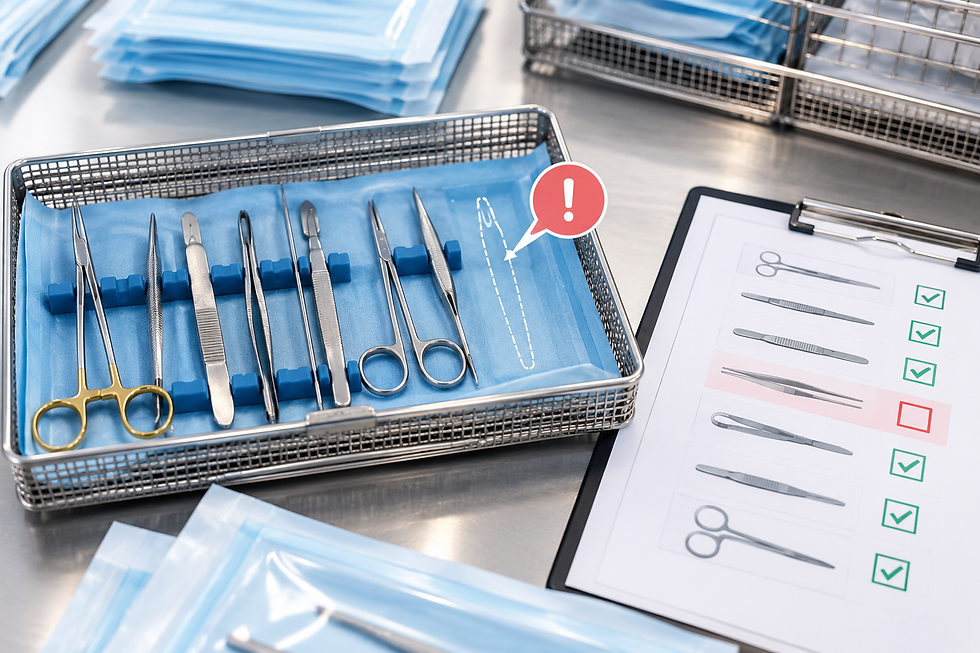
Once you know the procedures being performed, create a standard instrument configuration for each one.
For example, a minor procedure set might contain:
Scalpel handle
Tissue forceps
Scissors
Needle holder
Mosquito forceps
A podiatry set may contain:
Nail clipper
Blacks file
Probe
Other instruments suited to the clinic's treatment style
Standardising sets makes stock management much easier.
Staff know what should be included, clinicians receive a consistent setup and missing instruments are easier to identify.
Work Out How Many Sets You Need
One of the most common mistakes when opening a clinic is buying enough instruments for one day's procedures but not enough for the reprocessing cycle.
If instruments are being processed offsite, some sets will be:
In use
Awaiting collection
Being reprocessed
In transit
Back in sterile storage
The clinic therefore needs enough stock to operate while another batch is away.
Procedure volume and turnaround time should both be considered.
Decide Between Your Instruments, PodMed Instruments or a Hybrid
Clinics do not necessarily need to purchase every instrument themselves.
With PodMed, clinics can use:
Their own instrumentsUseful if you have already purchased suitable reusable instruments.
PodMed instrumentsUseful when establishing additional stock for the reprocessing rotation.
A hybrid modelA combination of clinic-owned and PodMed instruments.
A hybrid approach can reduce the amount of additional stock a new clinic needs to purchase while still creating enough sets for a reliable rotation.
Plan the Used-Instrument Workflow
Before opening, decide exactly what happens after an instrument has been used.
Staff should know:
Where used instruments are placed
How they are prepared for collection
Where the collection container is stored
How collection is requested
Who is responsible for the process
A clear workflow reduces confusion once the clinic becomes busy.
Keep Used and Sterile Instruments Separate
New clinics should establish separate locations for:
Sterile instruments ready for use
Used instruments awaiting collection
This separation should be obvious to staff.
Sterile stock should be kept in a clean, dry and protected area until required for a procedure.
Used instruments should enter the clinic's designated collection pathway.
Set Up Collection Before Opening
Collection logistics are much easier when they are organised before the clinic starts seeing patients.
With the PodMed Sterilising Management System, clinics can request collection using the QR-code process provided.
The workflow is straightforward:
Pack → Scan → Collection → Reprocessing → Sterile Return
Staff do not need to manually organise a new courier booking every time a batch is ready.
Think About Turnaround Time
Your instrument stock needs to match the expected collection and return timeframe.
A clinic located closer to the reprocessing facility may require fewer sets than a clinic with longer interstate freight times.
When planning a new clinic, consider:
Daily procedure volume
Weekly procedure volume
Turnaround time
Collection frequency
Backup stock
Unexpected increases in bookings
It is better to build some spare capacity into the system rather than operate with exactly the minimum number of instruments.
Set Up Traceability From Day One
Reprocessing records are easier to manage when the system is established from the beginning.
The PodMed portal provides access to relevant batch and processing information.
This gives the clinic a central location for documentation associated with its outsourced instrument reprocessing.
Starting with a structured digital system can be much easier than trying to reorganise years of paper records later.
Decide Who Will Manage Instrument Stock
Even with outsourced reprocessing, somebody within the clinic should have responsibility for monitoring instrument availability.
This might be:
Practice manager
Nurse
Clinic manager
Senior podiatrist
Administration team member
Their role does not need to involve performing the reprocessing.
Instead, they can monitor:
How many sterile sets are available
Whether batches have been collected
Whether replacements are required
Whether procedure volumes have changed
Whether additional sets are needed
Build Backup Capacity Into the System
New clinics can be difficult to predict.
Procedure numbers may grow faster than expected.
Instruments may become damaged.
A sterile pack may occasionally need to be removed from stock.
Having some additional sets available gives the clinic flexibility.
Running with no spare instruments means even one damaged or missing item can affect the procedure schedule.
Avoid Buying Reprocessing Equipment Before Reviewing Outsourcing
When planning a new clinic, it can be easy to assume that an autoclave and complete in-house reprocessing setup are automatically required.
However, clinics should compare both options first.
An internal system may involve:
Cleaning equipment
Autoclaves
Benches and sinks
Water systems
Packaging equipment
Consumables
Servicing
Validation
Documentation
Staff training
Dedicated space
For some clinics, outsourced reprocessing may remove the need to build and operate much of this infrastructure.
That can be particularly valuable where clinic space is limited.
Train Staff Before the First Collection
The collection process should be part of staff induction.
Before opening, make sure relevant team members know:
Where used instruments go
How to pack the collection container
How to request collection
Where returned sterile instruments are stored
How to check packaging
Where processing records are accessed
Who to contact if there is a problem
A simple system is much easier to follow consistently.
How PodMed Can Help New Clinics
PodMed Supplies can help clinics establish their reusable instrument workflow before opening.
The service includes:
Collection of used reusable instruments
Professional cleaning
Instrument inspection
Packaging
Steam sterilisation
Batch documentation
Traceability
Online portal access
Return delivery
Clinics can use their own instruments, PodMed instruments or a combination of both.
The goal is to establish a system that fits the clinic's procedure volume from the beginning and can scale as the practice grows.
Frequently Asked Questions
Should a new clinic buy an autoclave before considering outsourcing?
Not necessarily. It is worth comparing the infrastructure, equipment, staff time and ongoing requirements of in-house reprocessing with an outsourced model before making major purchases.
How many reusable instrument sets should a new clinic buy?
It depends on procedure volume and turnaround time. The clinic should have enough sets to continue operating while another batch is away being reprocessed, plus some backup stock.
Can PodMed supply instruments for a new clinic?
Yes. Clinics can use PodMed instruments, their own instruments or a hybrid of both.
When should we organise outsourced reprocessing?
Ideally before the clinic opens, so collection, storage, stock levels and staff procedures are already established from day one.
Can we add more sets later?
Yes. Instrument stock can be increased as procedure volumes grow.
How do staff arrange collection?
Used instruments are packed into the designated collection system and collection can be requested through PodMed's QR-code workflow.
Conclusion
Instrument reprocessing is much easier to manage when it is planned before a new clinic opens.
Start with your procedures, define your instrument sets, calculate enough stock for the reprocessing rotation and establish a clear collection and storage workflow.
This avoids trying to redesign the system once the clinic is already busy.
For clinics that do not want to build and manage a complete in-house reprocessing facility, outsourced reprocessing provides another option.
PodMed can help establish the instrument sets, collection process, traceability and sterile return workflow from the beginning.
Instrument Reprocessing Made Simple.
Clinic onboarding form:https://www.podmedsupplies.com.au/clinic-onboarding


Comments